Living in Bangkok changes the way you eat. The tourist version of the city is a curated loop of Khao San Road pad thai, rooftop bars, and cooking classes. The actual city — the one where eight million people navigate traffic, school runs, and the daily question of what to have for dinner — operates on a completely different set of priorities. Convenience matters. Consistency matters. And value matters far more than presentation.
The Weekday Lunch Economy
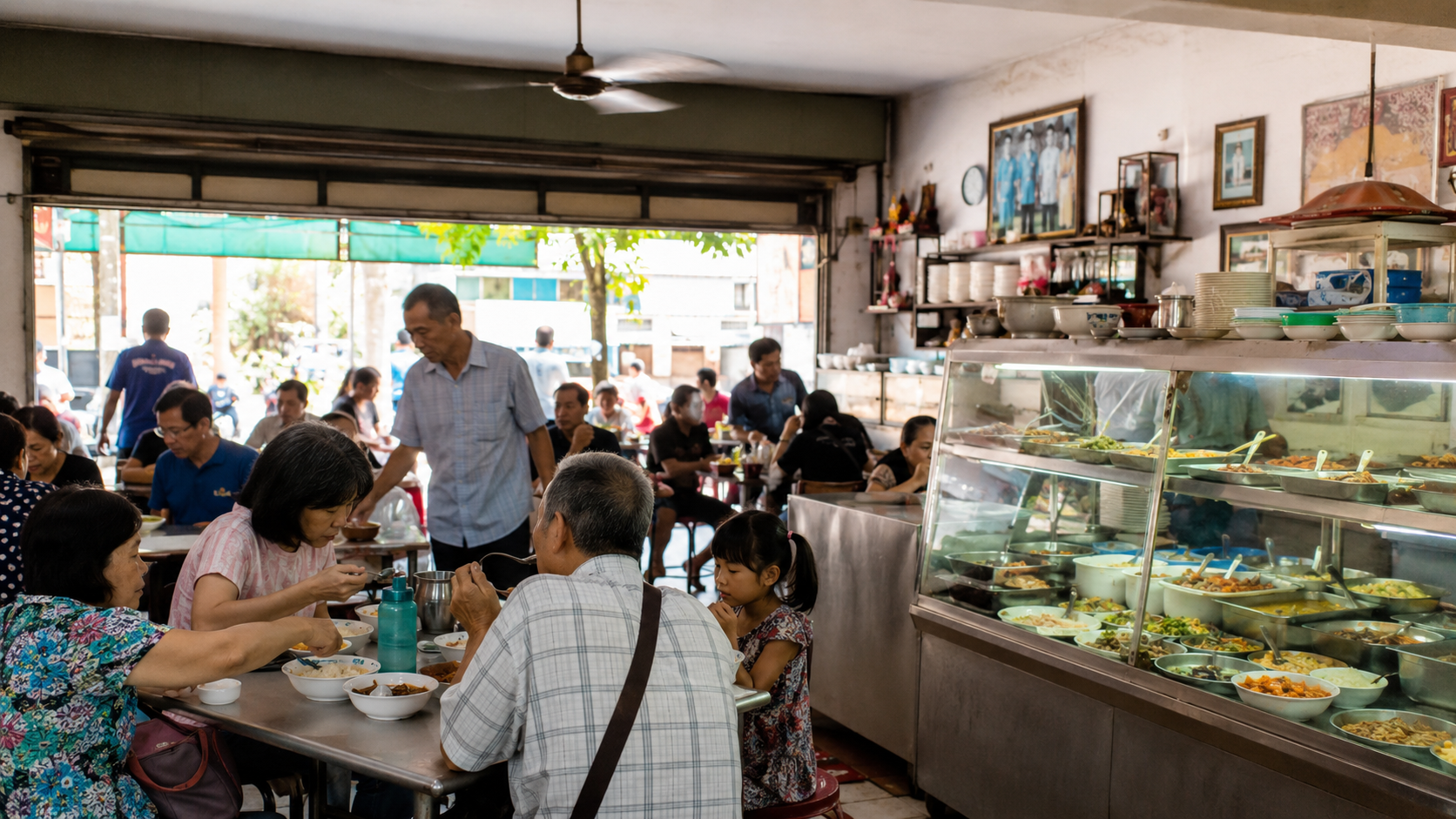
Most Bangkok office workers do not bring lunch from home. They eat at the khao gaeng shops, food courts, and street stalls that cluster around every office building and BTS station. This is not a compromise — it is a system that delivers better food than most people could cook at home, at prices that make doing so pointless.
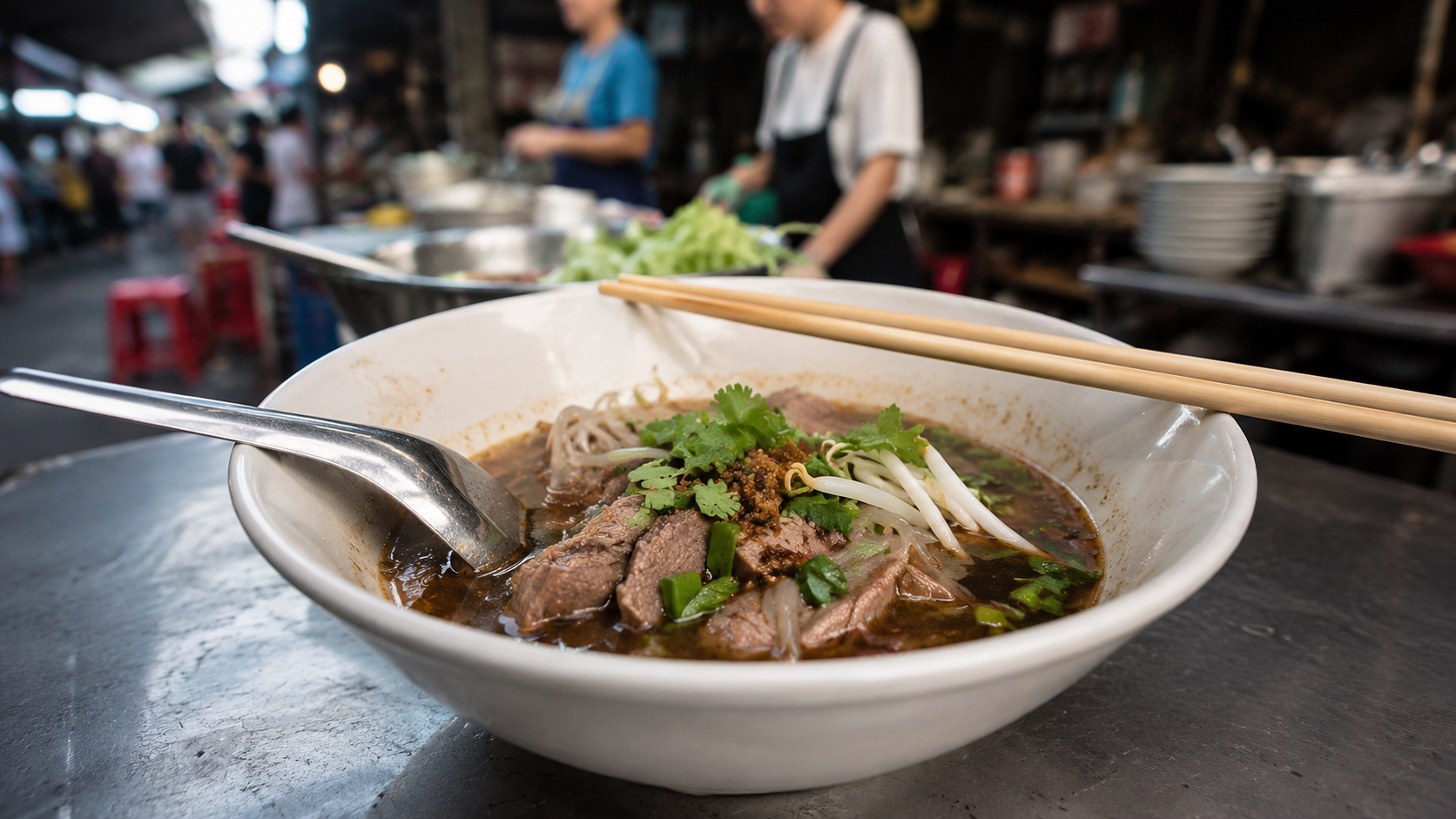
The food courts in buildings like Silom Complex and Central Chidlom are surprisingly good. They operate on a coupon system, and for sixty to eighty baht you can eat a plate of khao mok gai — Thai-Muslim chicken biryani — or a bowl of boat noodles that would cost three times as much if it were served in a restaurant with air conditioning and a wine list. The vendors in these food courts are professionals who cook the same dishes hundreds of times a day. Repetition produces mastery.
The Neighbourhood Regulars
Every Bangkok resident has a mental map of their neighbourhood's food resources. Mine includes a som tam vendor on Soi Thonglor 13 who makes a pla ra som tam — the Isaan-style version with fermented fish — that is violently sour and utterly addictive. There is a kuay tiew reua stall near Ekkamai BTS that serves dark, cinnamon-scented boat noodles in bowls barely larger than a teacup. You eat four or five of them, stacking the empties to keep count.
These are not destination restaurants. They are the places you default to three or four times a week because the food is reliable, the price is right, and the owner knows your order. If you want a comprehensive breakdown of where to find the BKK Scene's guide to Bangkok's real Thai dining scene has to offer, that kind of curation is exactly what makes the difference between eating well and eating randomly in this city.
Weekend Eating: The Upgrade
Weekends in Bangkok are for eating with intention. This is when residents venture out of their neighbourhood to try the places that require a drive, a queue, or both. Pee Aor on Soi Rangnam serves tom yum goong that has been written about so extensively it barely needs introduction — but the reason people still queue for forty-five minutes is that the soup genuinely is extraordinary. The broth is a napalm of roasted chilli paste, galangal, and river prawns the size of your fist.
In the Sathorn area, Somtum Der has built a small empire on the back of Isaan food served in a proper restaurant setting. Their larb moo tod — deep-fried minced pork salad — is a dish that should not work but absolutely does: crispy, sour, funky from the padaek, and ferociously spicy. They have branches in New York and Tokyo now, but the original Sathorn location remains the best.
The Late Night Tier
Bangkok does not sleep, and neither does its food supply. After midnight, a different set of vendors appears. The jok stalls on Yaowarat serve rice porridge to taxi drivers and night-shift workers. The roti mataba vendors near Phra Athit Road flip stuffed flatbreads for the bar crowd stumbling home along the river. At the 24-hour Hai stalls in the Banglamphu area, plates of stir-fried crab with curry powder arrive at tables occupied by everyone from university students to off-duty police officers.
This layered food economy — morning markets, lunch stalls, weekend destinations, late-night vendors — is what makes Bangkok one of the great eating cities. It is not about Michelin stars or celebrity chefs. It is about a city that has organised itself around the fundamental assumption that good food should be available to everyone, at every hour, at every price point. That assumption shapes everything.