There is a version of Bangkok that exists entirely for visitors — a strip of pad thai carts, mango sticky rice stands, and restaurants with laminated menus in four languages. It is fine. It is also not where anyone who lives here eats. The real Bangkok food scene operates in a parallel universe of shophouse kitchens, market stalls that close by noon, and restaurants where the menu is a handwritten sheet of paper taped to the wall.
Charoen Krung and the Old City
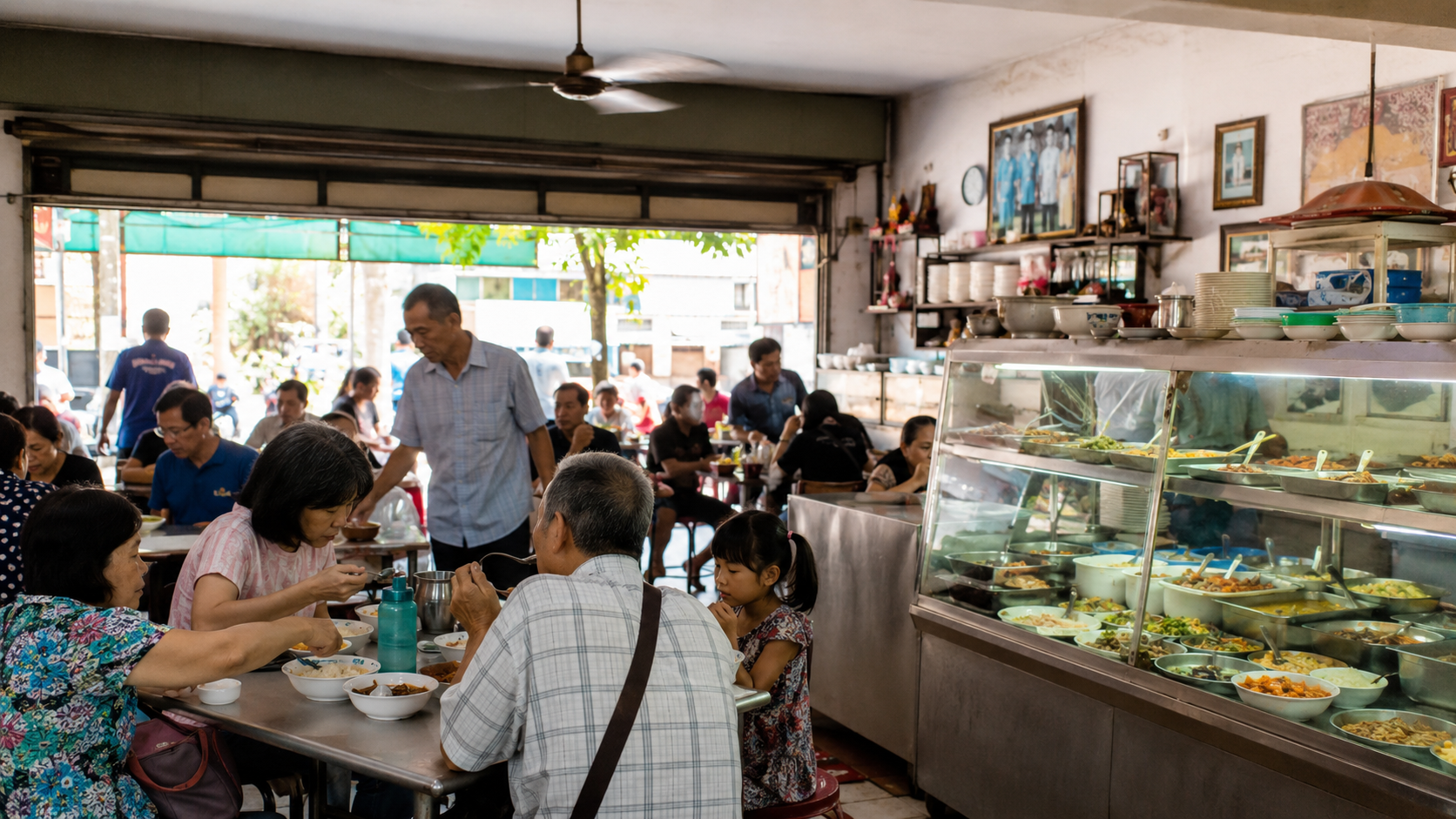
Charoen Krung Road, Bangkok's oldest paved street, is where the city's food history lives. The shophouses along this stretch have been home to curry rice joints — known as khao gaeng — for generations. At the best of these, you arrive before eleven in the morning, point at the steel trays of curries lined up behind the glass, and receive a plate of rice with two or three choices ladled over the top. Gaeng massaman made with beef shin that has been braised until it shreds at the touch of a spoon. A dry-fried prik khing with long beans so intensely flavoured it barely needs the rice beneath it.
These are not Instagrammable meals. They are sixty-baht lunches eaten quickly at communal tables, and they represent Thai cooking at its most honest. As Eater has documented extensively, this kind of everyday Thai food rarely makes it onto best-of lists, yet it is the foundation on which the entire cuisine rests.
Yaowarat: More Than Chinatown
Yaowarat gets reduced to "Bangkok's Chinatown" in most guides, which misses the point entirely. It is a Thai-Chinese neighbourhood where two culinary traditions have been merging for over two hundred years. The result is a cuisine that belongs to neither China nor Thailand but is entirely its own thing.
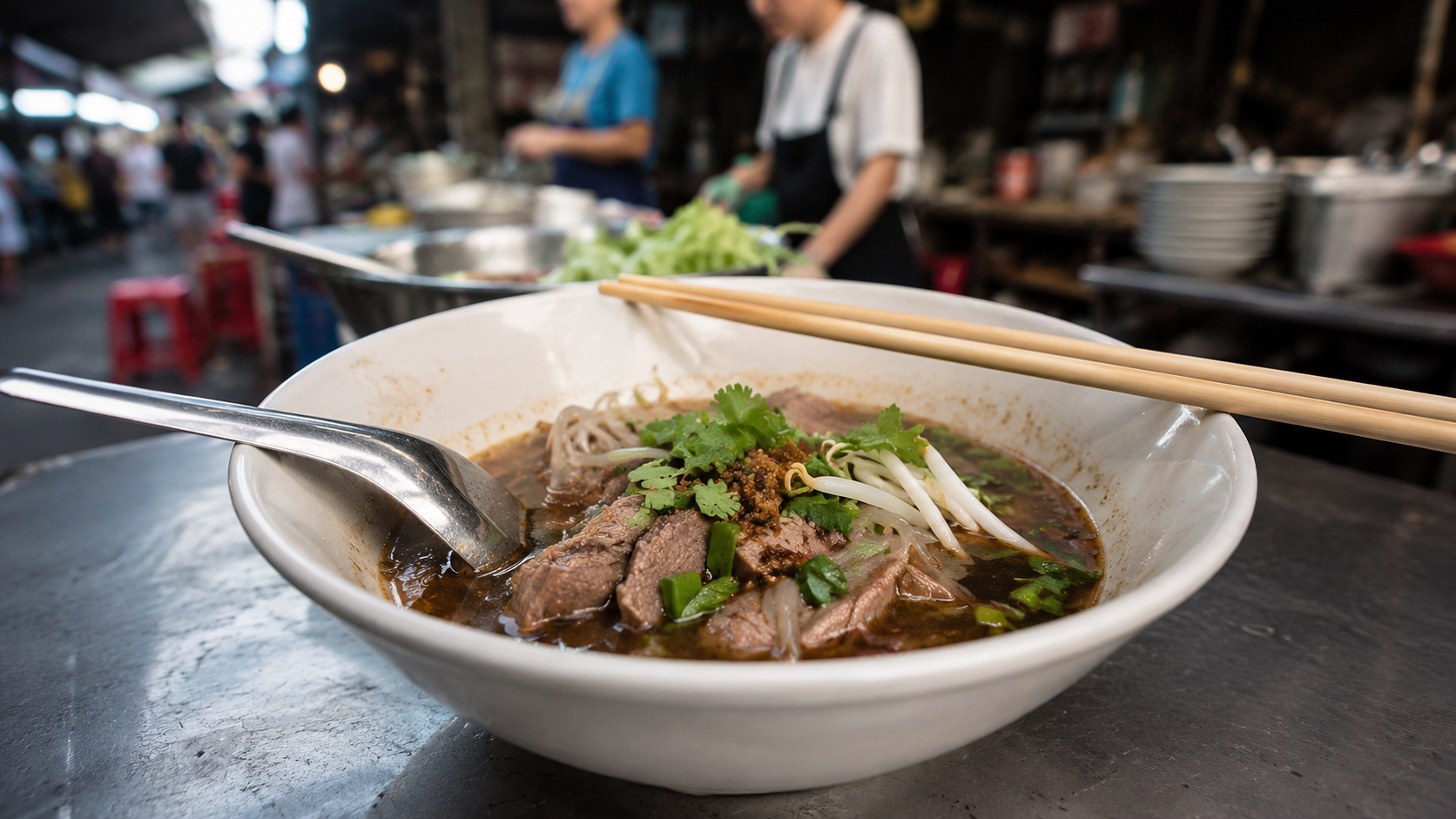
The jok — rice porridge — stalls along Yaowarat Road open before dawn and serve bowls of slow-cooked congee topped with a raw egg that cooks in the residual heat, a drift of white pepper, and slices of pork liver so fresh they still have that mineral edge. By seven in the morning, the construction workers and taxi drivers who make up the regular clientele have eaten and gone. By eight, the stall is closed.
Ari and the New Neighbourhood Restaurants
The Ari neighbourhood, up along Phahonyothin Road, represents a different strain of Bangkok eating. This is where young Thai chefs are opening small, personal restaurants that draw on regional traditions without the formality of fine dining. A shophouse on Soi Ari might serve nothing but khao soi — the coconut curry noodle soup from Chiang Mai — prepared with a curry paste ground fresh each morning and egg noodles made in-house.
What makes these places special is not innovation but precision. They are not trying to reinvent Thai food. They are trying to cook a single dish or a small menu of dishes at the highest possible level, using the best ingredients they can source, and charging prices that keep the neighbourhood coming back.
The Markets Nobody Talks About
Or Tor Kor Market, near Chatuchak, gets all the press because it is clean and photogenic. But the market that serious cooks and restaurant buyers use is Khlong Toei, a sprawling wet market near the port where the produce arrives fresh off the trucks each morning. The shrimp paste vendors here sell product that was made in Samut Sakhon days ago, not months. The galangal still has dirt on it. The bird's eye chillies are so fresh they squeak when you squeeze them.
This is where Bangkok's food actually begins — not in the restaurants but in the markets that supply them. Understanding the city's food means understanding its supply chain, and that chain starts at Khlong Toei before the sun comes up.