Bangkok has a relationship with buffets that borders on obsessive. In a city where eating out is cheaper than cooking at home and portion sizes are generous by default, the concept of unlimited food should be redundant. And yet, the buffet scene here is enormous — from luxury hotel spreads that rival anything in Tokyo to neighbourhood yakiniku joints where university students eat their body weight in pork belly for three hundred baht.
The Hotel Tier
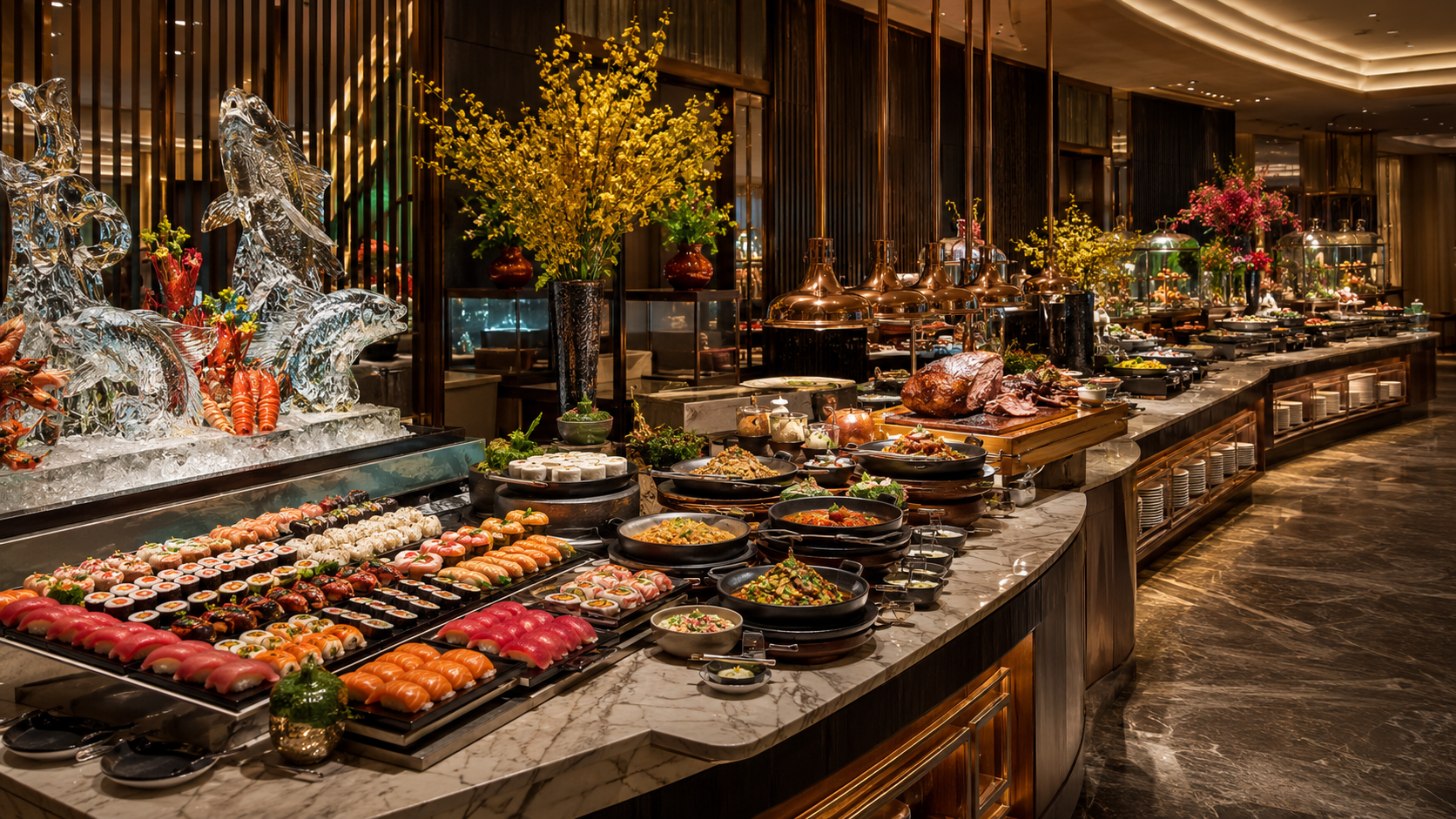
Bangkok's five-star hotels have turned the buffet into an art form. The Sunday brunch at the Marriott Marquis on Sukhumvit is a sprawling affair that covers an entire floor: a raw bar with imported oysters, a Japanese corner with a sushi chef rolling nigiri to order, a carving station with prime rib, and a dessert section that would make a pastry chef weep. At around two thousand baht with free-flow wine, it is not cheap — but the quality of the ingredients and the sheer range of what is on offer make it a genuine event rather than a meal.
The Shangri-La's NEXT2 restaurant runs a seafood buffet on Friday and Saturday evenings that has become something of a Bangkok institution. The centrepiece is a tower of river prawns, blue crabs, and rock lobster on ice, replenished constantly throughout the evening. The Thai dishes at the hot station — gaeng som with prawns, pla kapong neung manao — are cooked to a standard that most standalone restaurants would struggle to match.
The Yakiniku Underground
At the opposite end of the spectrum, Bangkok's yakiniku buffets operate on volume and value. Chains like Gyumon and Sukishi offer all-you-can-eat Korean and Japanese-style grilled meat at prices that would be impossible anywhere else. The meat quality varies — at the lower price tiers, you are getting thinly sliced pork and chicken rather than marbled wagyu — but the experience is what draws people: the sizzle of the grill, the social ritual of cooking together, the competitive edge of trying to eat more than the table next to you.
The best of these mid-range buffets is arguably Pang Yakiniku in the Ratchada area, where the premium tier gives you access to Australian beef, salmon sashimi, and a surprisingly good tom yum soup base for your hot pot. For a comprehensive look at what the city offers, the guide to the BKK Scene's breakdown of Bangkok's best all-you-can-eat spots breaks down every tier from budget to luxury in a way that actually helps you decide where to spend your money.
Mookata: Thailand's Own Buffet
No discussion of Bangkok buffets is complete without mookata — the Thai-style barbecue that combines a domed grill with a surrounding moat of soup. Derived from Korean BBQ and adapted with Thai ingredients, mookata is the country's most democratic dining format. Restaurants like Moo Manao in the Lat Phrao area charge two hundred and fifty baht per person for unlimited pork, seafood, vegetables, and noodles, plus a selection of dipping sauces that range from mild to incendiary.
The genius of mookata is its flexibility. The dome of the grill gets hot enough to sear meat, while the soup moat below catches the dripping fat and renders it into an increasingly rich broth. By the end of the meal, the soup has absorbed the flavour of everything you have cooked, and the final course is essentially a bowl of concentrated pork and seafood broth that you drink straight from the pot.
The Strategy Question
Bangkok residents approach buffets with a seriousness that visitors find amusing but that reflects a genuine cultural relationship with value and abundance. The strategies are well established: skip the rice and bread (filler), start with sashimi and seafood (highest ingredient cost), move to grilled items, and save dessert for when you have a verdict on whether the kitchen is actually restocking the good stuff.
There is something joyful about the Bangkok buffet scene that transcends the cynicism of all-you-can-eat dining elsewhere. In a city that loves to eat, the buffet is not a compromise — it is a celebration of appetite itself. Whether you are spending five hundred baht at a neighbourhood mookata or two thousand at a hotel brunch, the underlying impulse is the same: the pleasure of having more than enough.