There is a category of dish that exists beyond preference or recommendation — meals so tied to a specific place, a specific cook, a specific set of ingredients that they cannot be meaningfully reproduced anywhere else. These are not recipes you can follow at home. They are experiences that require a plane ticket, a willingness to queue, and the understanding that some things are only worth eating at the source.
Char Kway Teow in Penang
Every Malaysian state claims the best char kway teow, but Penang's version exists on a different plane. The dish is deceptively simple — flat rice noodles stir-fried in lard with prawns, cockles, Chinese sausage, bean sprouts, and chives, finished with a dark soy sauce and a cracked egg. The magic is in the wok hei, the breath of the wok, which requires a carbon steel pan seasoned over years and a burner producing heat that no home kitchen can approach.
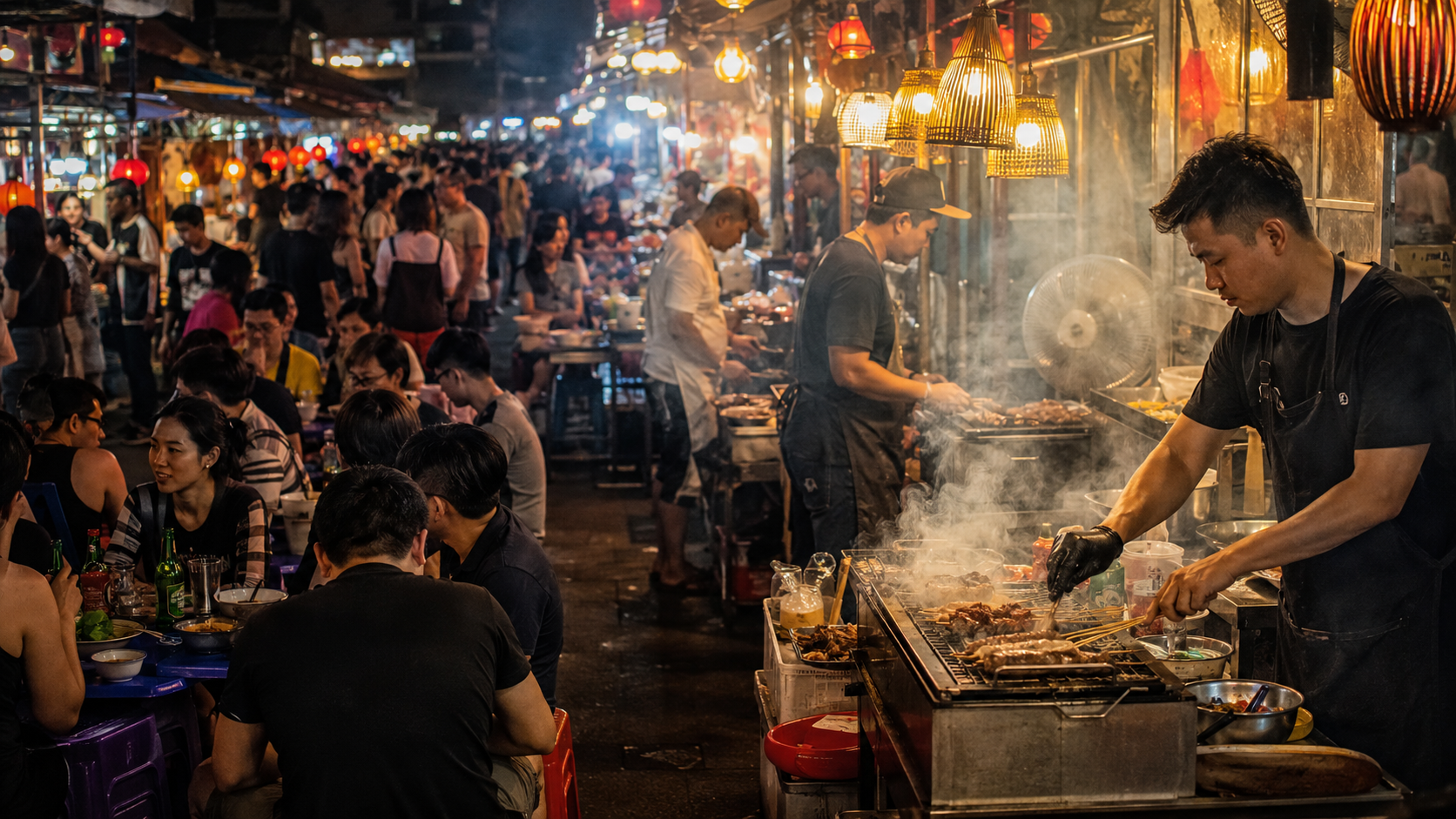
The stall to seek out is Siam Road Char Kway Teow, run by a vendor who has been cooking this single dish for decades. He works a battered wok over a charcoal fire, and each plate takes about ninety seconds from start to finish. The noodles are smoky, slightly charred at the edges, and the cockles retain a briny pop that tells you they were alive an hour ago. You eat it standing at the counter and you understand, immediately, why people fly here for this.
Bun Cha in Hanoi
Bun cha is Hanoi's gift to the world — grilled pork patties and slices of caramelised pork belly served in a bowl of sweet, tangy dipping broth with rice vermicelli and a mountain of fresh herbs. The dish is lunch in Hanoi, served from about eleven in the morning until the vendors run out of meat, usually by two.
The version at Bun Cha Huong Lien in the Old Quarter — forever known as "the Obama bun cha place" after a certain televised dinner — is excellent but far from the only option. Walk five minutes in any direction and you will find vendors producing equally extraordinary versions, each with their own ratio of sweet to sour in the broth and their own approach to the grill. The pork is charred over longan wood coals, which gives it a subtle fruitiness that gas grills cannot produce.
Khao Soi in Chiang Mai
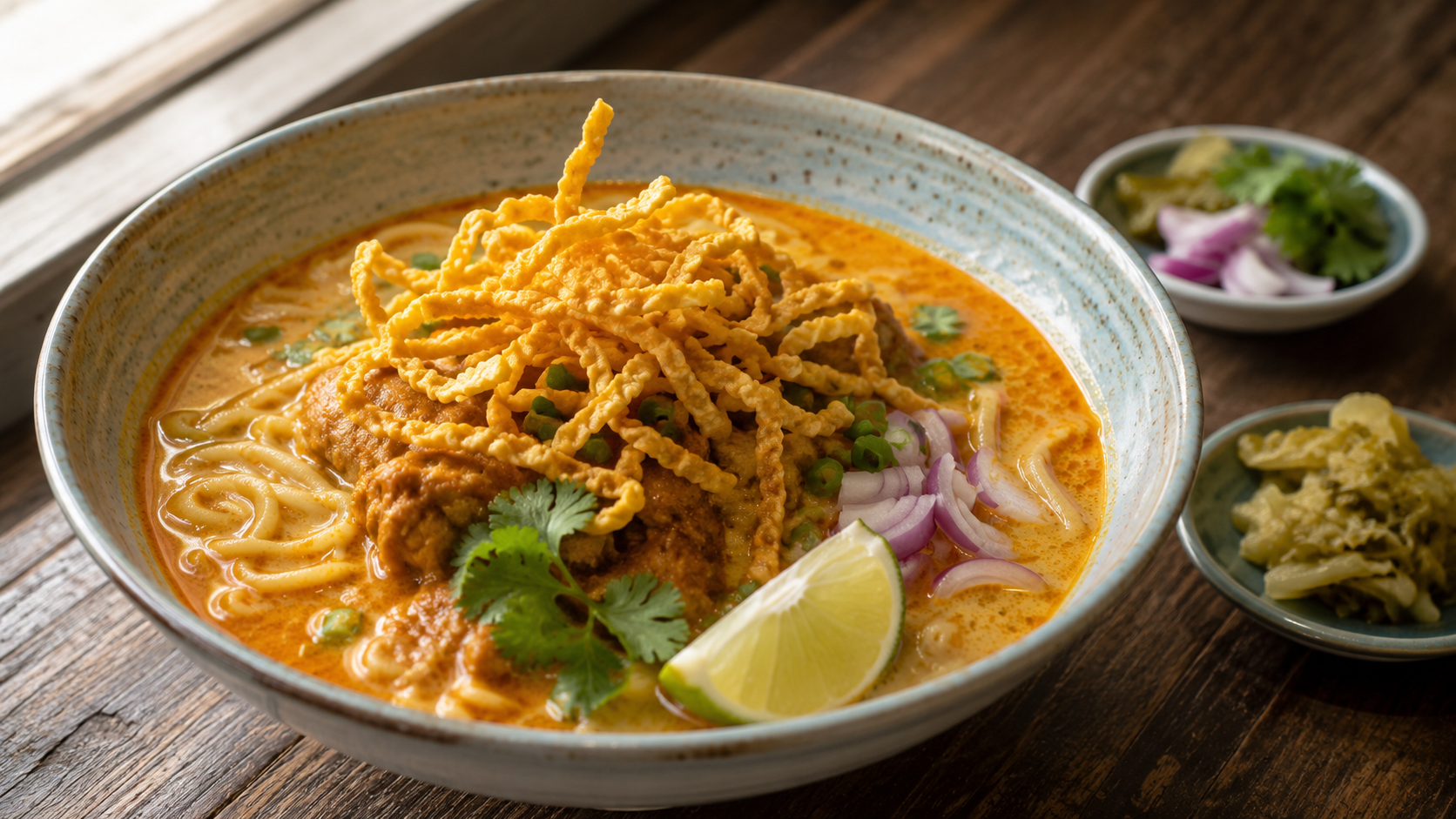
Khao soi — the coconut curry noodle soup of northern Thailand — is available all over the country, but eating it in Chiang Mai is a different experience. The curry paste here is made with dried chillies that have been grown in the hills surrounding the city, and the coconut cream comes from fresh-pressed coconut rather than cans. The result is a curry that tastes brighter, more complex, and less cloying than any version you have had elsewhere.
Khao Soi Khun Yai, a small shop on a residential soi near Kad Suan Kaew, serves what many locals consider the benchmark. The curry is rich without being heavy, the egg noodles have the right amount of alkaline chew, and the crispy noodle topping — fried until golden and shattered over the surface — provides a textural contrast that makes the soft noodles below taste even more luxurious. They also serve it with a side of pickled mustard greens and raw shallots that cut through the richness like a knife.
Nasi Lemak in Kuala Lumpur
Nasi lemak is Malaysia's national dish, and arguing about where to find the best version is the country's unofficial sport. The coconut rice — fragrant, slightly sweet, cooked with pandan leaves — is the foundation, but the dish lives or dies on its sambal. The best sambal is made from dried chillies, shrimp paste, and tamarind, cooked down until it is thick, dark, and deeply savoury with a heat that builds slowly.
Village Park in Damansara Uptown serves a nasi lemak with ayam goreng — fried chicken — that has achieved near-mythical status. The chicken is marinated in a turmeric and lemongrass paste, fried until the skin crackles, and served with a sambal so good that people buy extra pots of it to take home. At peak hours, the queue wraps around the building. Nobody minds. The wait is part of the ritual.
The Point of Pilgrimage
Travelling for a single dish sounds excessive until you have done it. Then it makes perfect sense. These meals are not just food — they are the compressed expression of a place, a climate, a tradition, and a cook's lifetime of practice. You cannot separate the char kway teow from the Penang afternoon, the charcoal smoke, the plastic stool, the uncle working the wok. Remove any of those elements and you have a different dish. The meal and the place are the same thing, and that is why you fly.