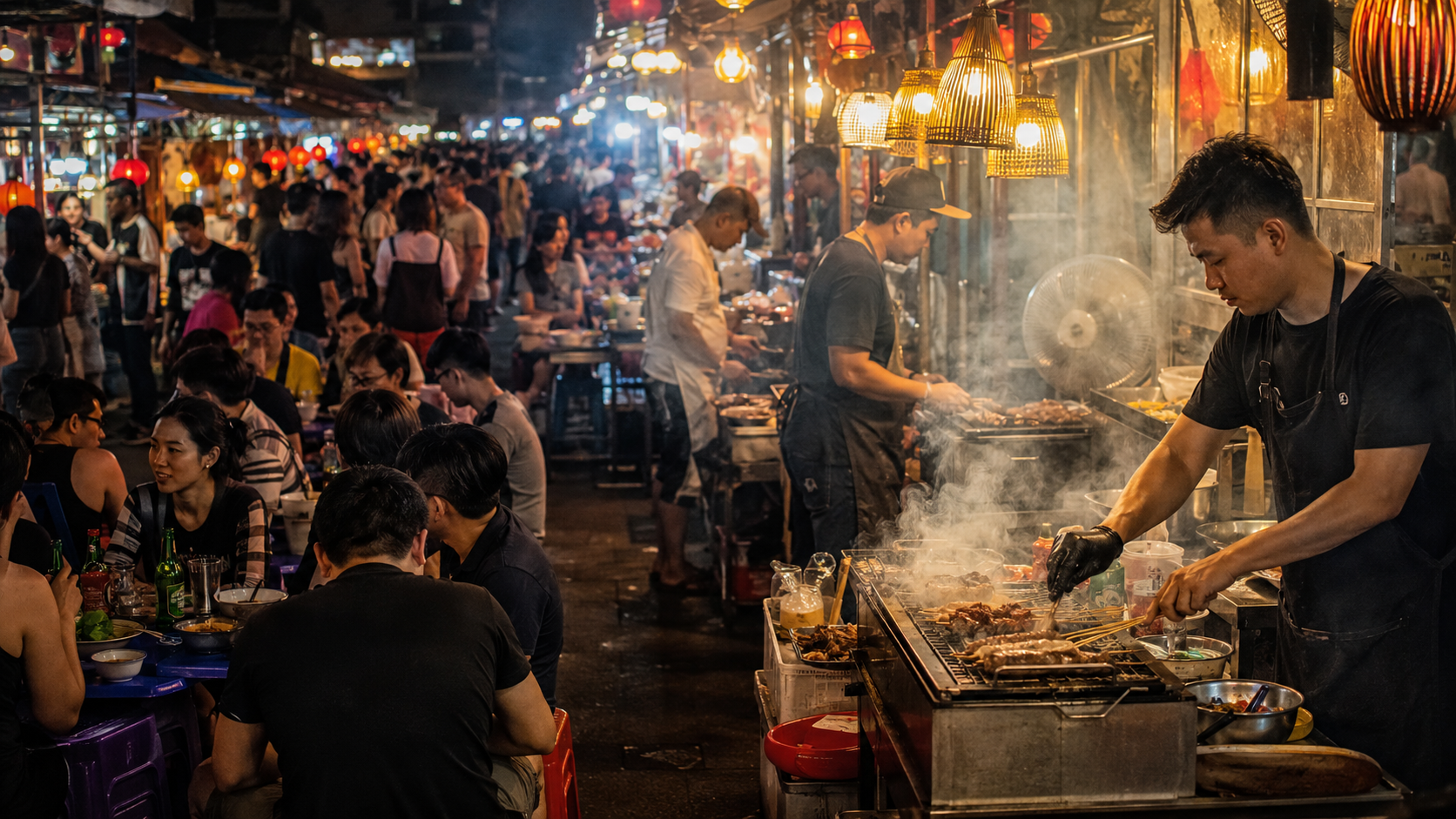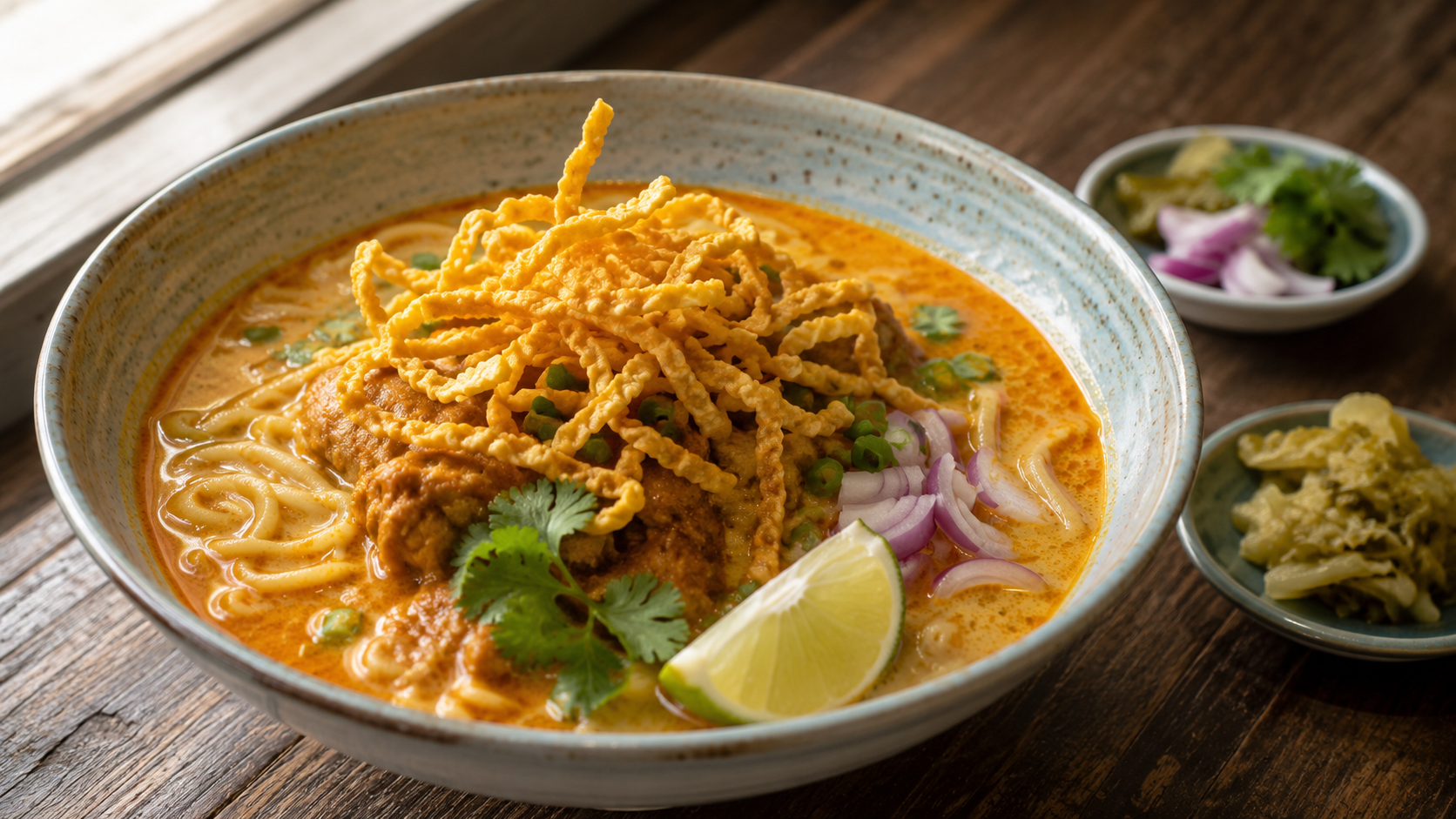
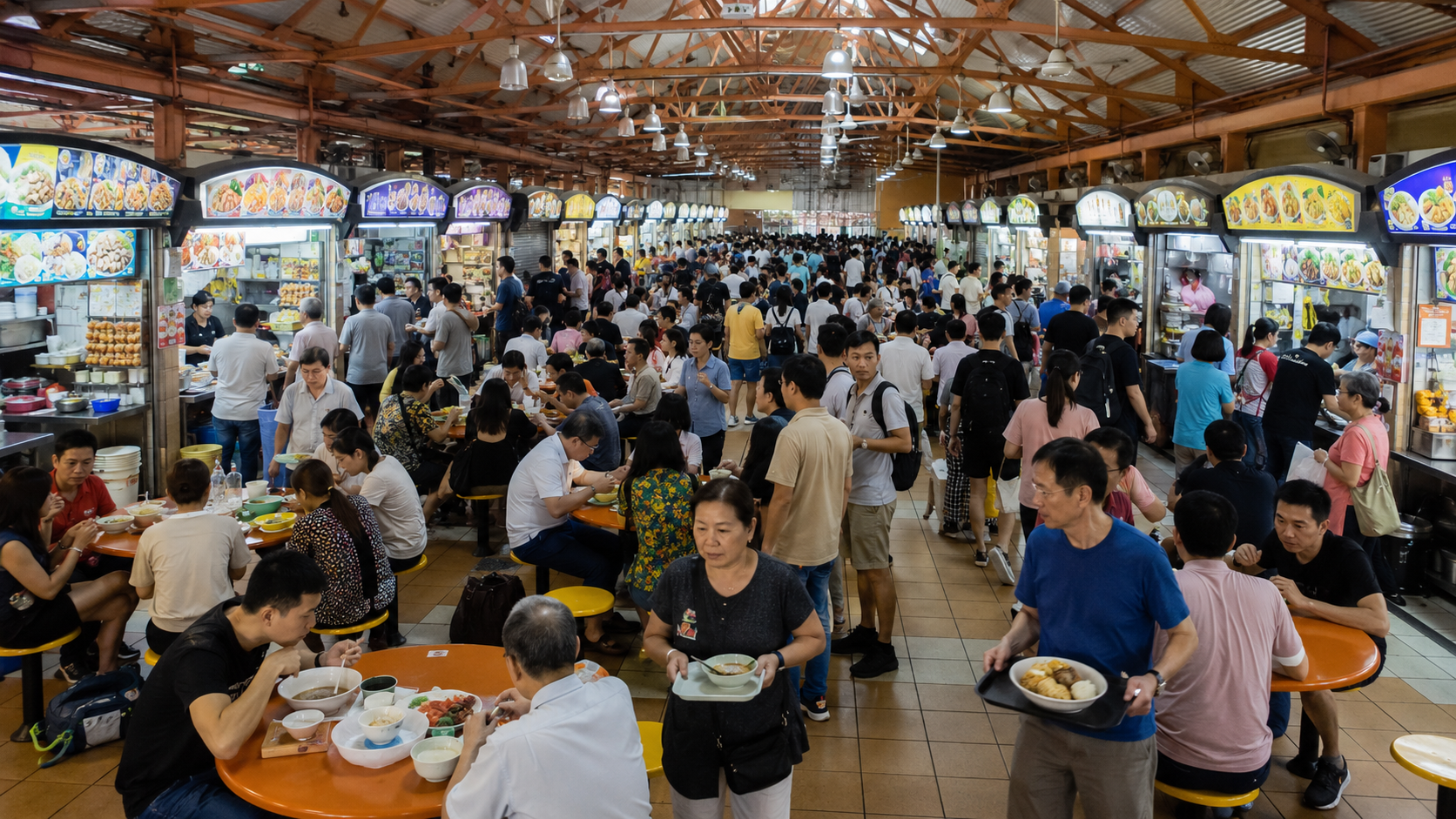
There was a time, not long ago, when eating food prepared on a pavement was considered a sign of poverty or desperation in most Western countries. Street vendors were health hazards, obstacles to foot traffic, remnants of a pre-modern food system that proper cities had outgrown. Then something changed. The street vendors did not move — the world came to them.
The Southeast Asian Model
In Bangkok, Hanoi, Penang, and Jakarta, street food was never a step down from restaurant food. It was often better. The economics of the street stall — low overhead, no rent on a kitchen, a captive audience of commuters and workers — created conditions where a cook could specialise in a single dish and refine it over decades. The result was food of extraordinary quality sold at prices that made restaurants seem like a waste of money.
This model was invisible to most of the Western food world until the early 2000s, when a combination of cheap flights, food television, and the internet brought Southeast Asian street food to a global audience. Anthony Bourdain, more than any other single figure, deserves credit for showing Western viewers that the best meal in a city might come from a woman cooking over charcoal on a side street rather than a chef in a toque behind a pass.
The Michelin Moment
When the Michelin Guide awarded its first star to a street food vendor — Jay Fai in Bangkok, in 2018 — it was both a recognition and a provocation. The recognition was overdue: Jay Fai's crab omelette, cooked in a wok over a fire so intense it requires safety goggles, is a dish of genuine brilliance. The provocation was in the implicit admission that the entire restaurant-centric framework of fine dining had been too narrow.
Singapore and Hong Kong followed, with their own Michelin street food inclusions. The message was clear: quality has nothing to do with tablecloths. A vendor in a hawker centre who has spent thirty years perfecting char siu is producing food that deserves the same respect as a three-star kitchen in Lyon.
How the West Caught Up
The influence of Southeast Asian street food on Western eating culture has been profound and largely unacknowledged. The entire "fast casual" restaurant category — Chipotle, Sweetgreen, the endless poke bowl chains — borrows its operational model from the Asian street stall: a limited menu, cooked to order, served quickly, eaten without ceremony. The food truck movement that swept American cities in the 2010s was a direct translation of the hawker cart into a Western context.
More specifically, the flavour profiles that dominate contemporary Western cooking owe an enormous debt to street food traditions. The lime-chilli-herb combination that appears on everything from tacos to grain bowls traces back to the som tam cart. The crispy-savoury-sweet interplay of a modern fried chicken sandwich echoes the balance of a well-made gai tod from a Thai market stall.
What Gets Lost in Translation
The danger, of course, is dilution. When a Bangkok street vendor's som tam becomes a "Thai-inspired papaya salad" on a menu in Denver, something essential is lost — not just flavour but context. Street food is not just food that happens to be cooked on a street. It is an economic system, a social institution, and a culinary tradition that has been shaped by specific conditions of climate, agriculture, and culture.
Transplanting the dishes without understanding the system that produced them is how you end up with pad thai made from ketchup and peanut butter. The ingredients travel; the knowledge often does not.
The best outcome of this global street food moment would be a deeper engagement with the source traditions — not just eating the food but understanding why it tastes the way it does, who makes it, and what it means to the communities that created it. Whether that happens depends on whether the world's appetite for Southeast Asian street food extends beyond the plate.