Chilli peppers arrived in Thailand via Portuguese traders in the sixteenth century, and within a few generations they had so thoroughly colonised the cuisine that imagining Thai food without them is like imagining Italian food without tomatoes. But here is the thing most people get wrong: Thai cooking is not simply about heat. It is about using different chillies for different purposes — some for colour, some for flavour, some for a searing burn that arrives ten seconds after you swallow.
Prik Kee Noo: The Little One That Ruins You
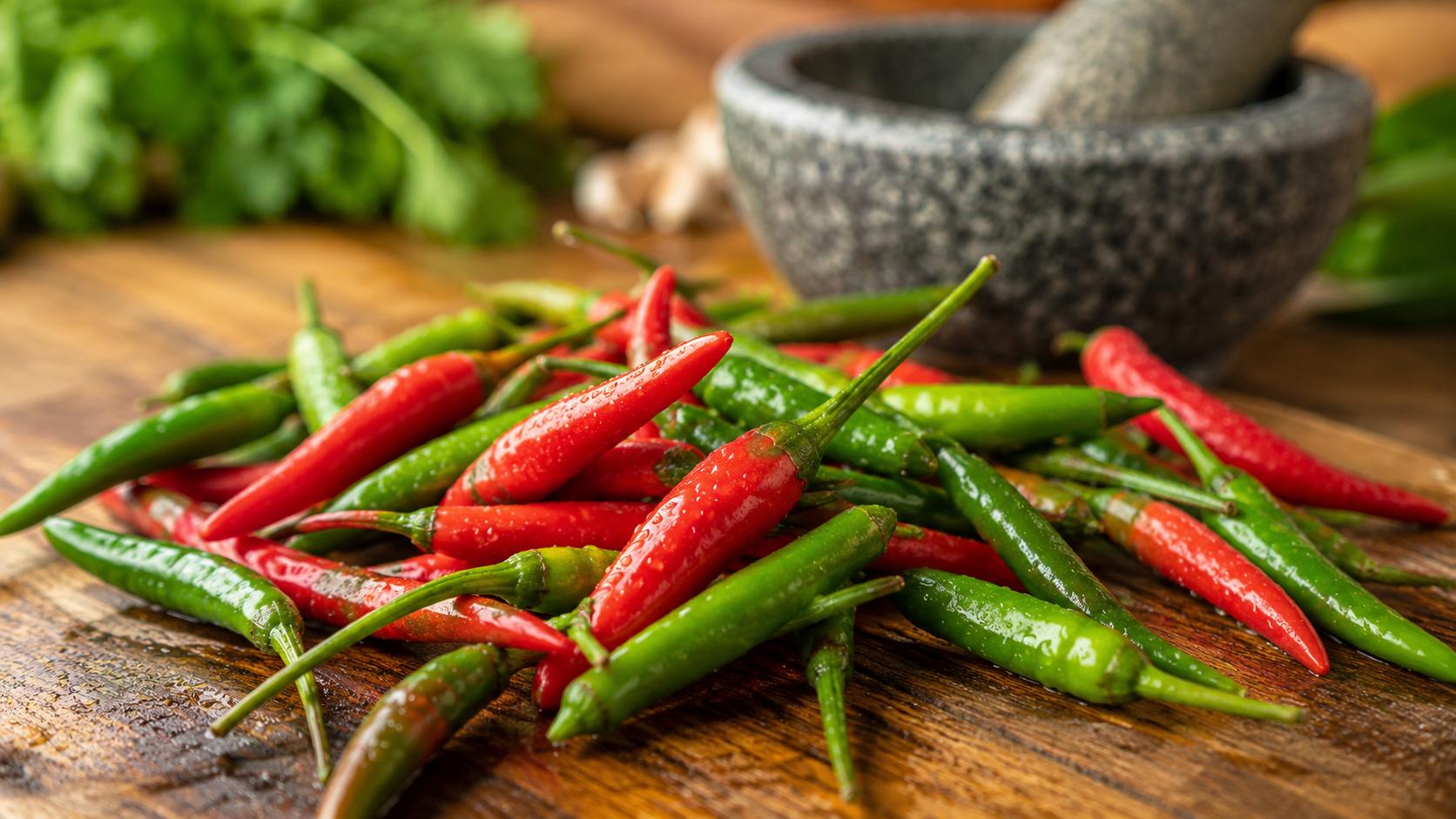
The bird's eye chilli, prik kee noo, is the workhorse of Thai heat. Small enough to hide in a spoonful of rice, it packs a Scoville rating between fifty and one hundred thousand units. For context, a jalapeno tops out around eight thousand. These are the chillies sliced raw into nam pla prik — the fish sauce and chilli condiment that sits on every Thai table — and pounded into som tam, where their heat is tempered by lime juice and palm sugar.
What makes prik kee noo essential is not just its heat but its flavour. There is a sharp, green, almost herbaceous quality to a fresh bird's eye chilli that dried chillies cannot replicate. When you bite into one in a bowl of gaeng pa — the thin, fiery jungle curry — the heat is immediate and intense, but underneath it there is a brightness that lifts the dish rather than simply burning.
Prik Chee Fah: The Everyday Chilli
Prik chee fah, the sky-pointing chilli, is the long red or green pepper that appears in stir-fries, curry pastes, and as a garnish on virtually everything. It is milder than the bird's eye — maybe fifteen to thirty thousand Scoville units — but its real value is in its flesh. Where prik kee noo is mostly seed and membrane, prik chee fah has thick walls that contribute body and colour to curry pastes.
When dried, prik chee fah becomes prik haeng, the backbone of northern Thai relishes like nam prik ong and the laab dressings of Isaan cuisine. Toasting dried chillies in a dry wok until they blister and darken is one of the fundamental techniques of Thai cooking — it caramelises the sugars in the skin and produces a smoky, rounded heat that is completely different from the sharp attack of a fresh chilli.
Prik Yuak: The Gentle Giant
Not everything in Thai cooking is about fire. Prik yuak, a large, pale green chilli similar to a banana pepper, is mild enough to eat whole. Stuffed with a pork and glass noodle filling and steamed, it becomes a comfort dish that belongs in the same conversation as stuffed peppers anywhere in the world. In northern Thailand, prik yuak is charred over coals and pounded into nam prik noom, a smoky green chilli relish served with sticky rice and crispy pork rinds.
The mildness of prik yuak is not a limitation — it is a design feature. In a cuisine that already has prik kee noo providing extreme heat, having a chilli that contributes pepper flavour without overwhelming everything else is essential for balance. Within Thai culinary traditions, this understanding of balance across sweet, sour, salty, and spicy is what separates competent cooking from great cooking.
Prik Pon and Prik Phao: The Transformed Chillies
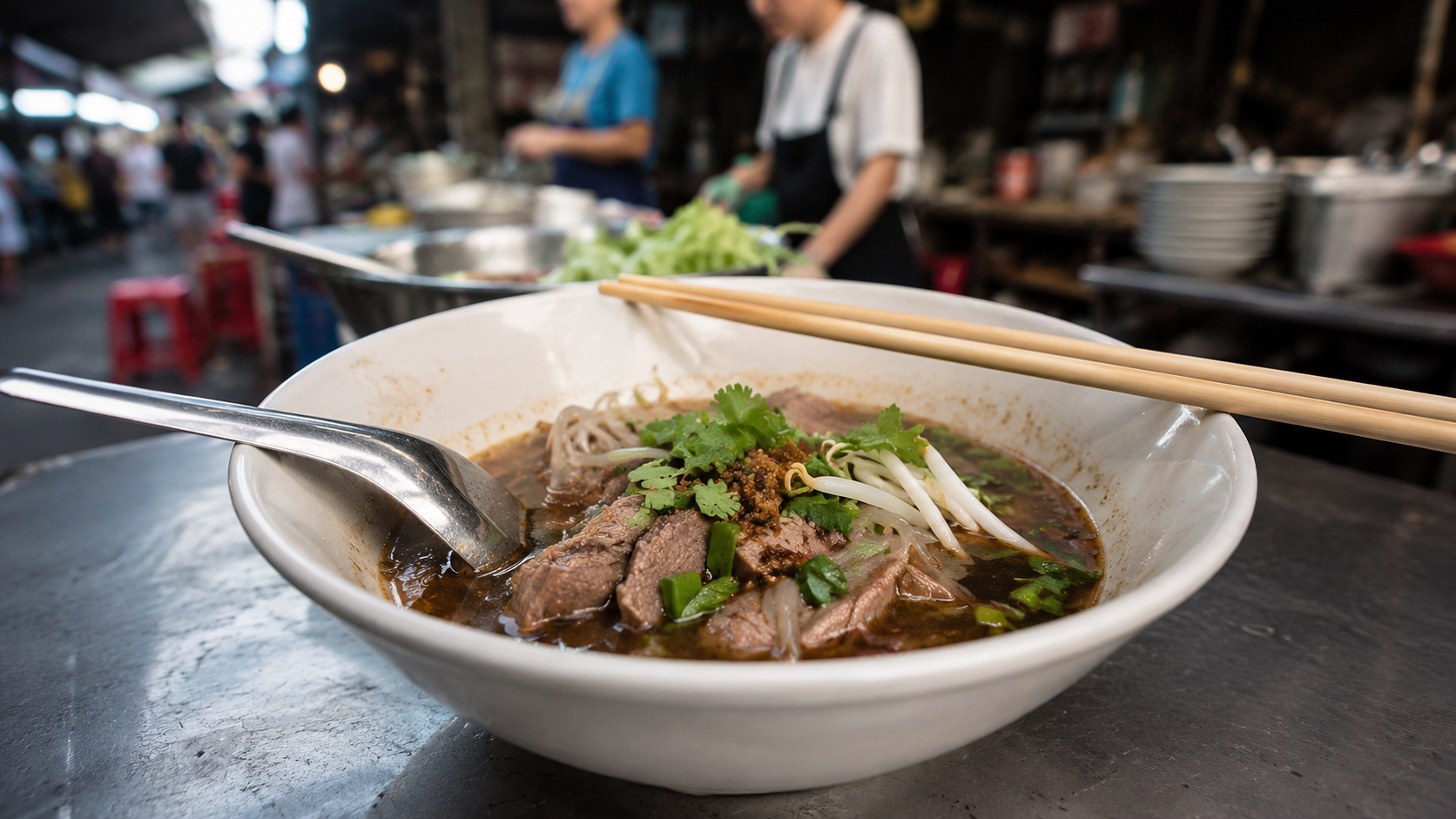
Thai cooks do not just use chillies raw or dried — they transform them. Prik pon, roasted chilli flakes, is the simplest transformation: dried chillies toasted and crushed. It appears in the condiment caddy at every noodle stall in Thailand, alongside vinegar, sugar, and fish sauce. The quality varies enormously — at the best shops, the flakes are made from a specific variety of dried chilli toasted that morning.
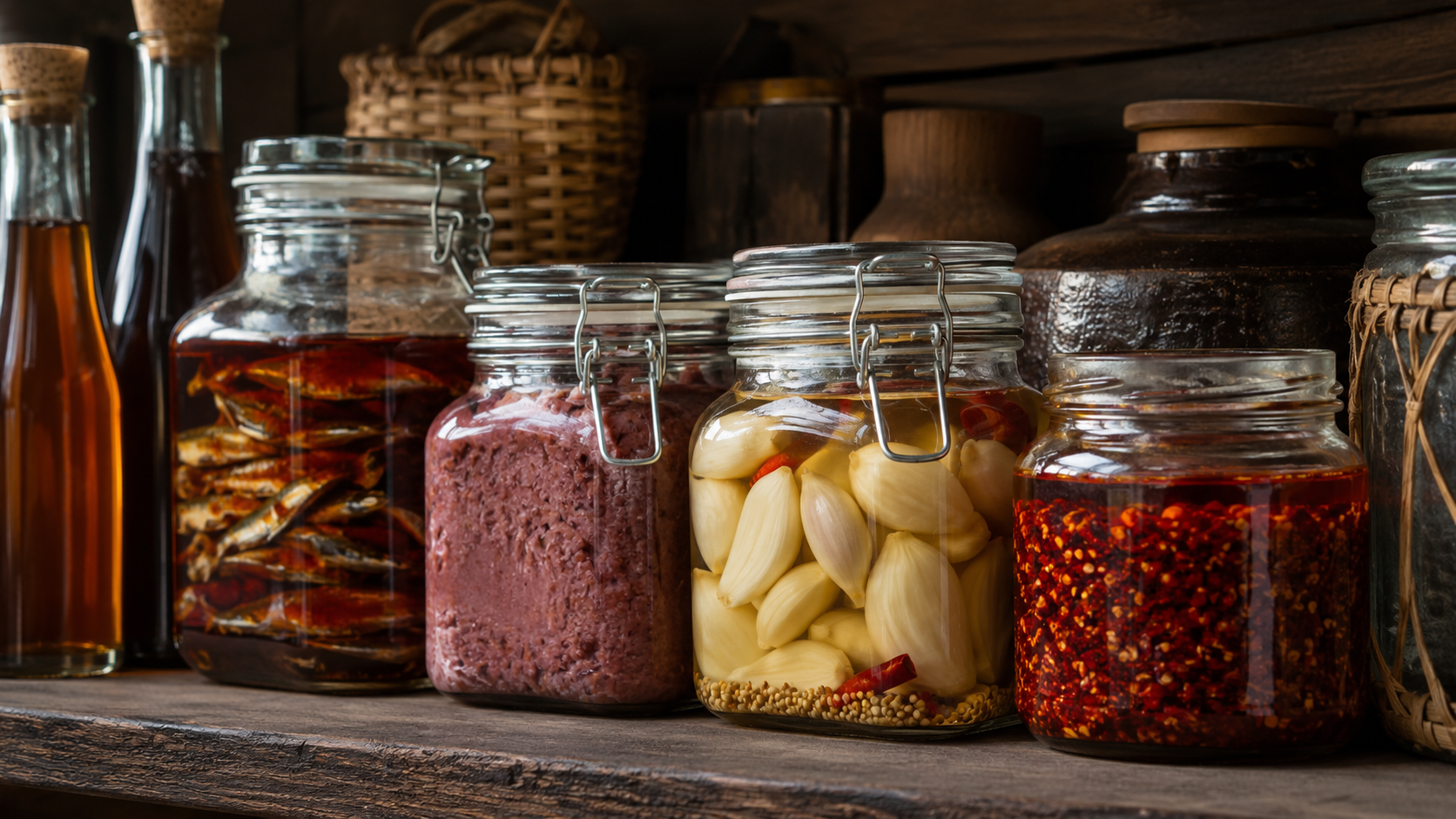
Prik phao, or roasted chilli paste, is a more complex product. Dried chillies are fried in oil with garlic and shallots, then pounded into a thick, dark paste with fish sauce, tamarind, and palm sugar. This is the ingredient that gives tom yum its characteristic ruddy colour and smoky depth. Without prik phao, tom yum is just a sour soup. With it, the soup gains a dimension of flavour that ties everything together.
Building Your Heat Tolerance
If you are new to Thai heat, the path is gradual. Start with dishes where chilli is a background note — gaeng massaman, pad see ew, khao pad. Move to medium-heat dishes like pad kra pao and green curry. Eventually you will find yourself ordering som tam Thai and telling the vendor "phet mak" — very spicy — without thinking twice. The tolerance builds, and with it comes access to an entire tier of Thai cooking that is invisible to the chilli-shy. The reward is worth the burn.